The Sweeps Kill screening circle showed me that media representation can be what primarily shapes the perceptions of our thoughts and opinions on certain subjects. What resonated most was the reflection of Seattle’s lack of empathy for the poor and unsheltered individuals in the city. In San Diego county we are seeing similar effects of city policy on homelessness and the active enforcement of bans and ticketing on public camping and vehicle habitation. It is critical to show the ups and downs of unsheltered individuals and the impact of federal laws that affect them daily.
Recently on social media, unsheltered people are portrayed as sob stories or as addicts. A common trend I've seen on TikTok is people going into the streets to prioritize views and personal gain by showing themselves providing for someone unsheltered. It causes harm to a person's dignity and well-being by creating negative stereotypes. What are these videos doing to make long-term changes? What should be the primary focus is informing how to support programs for those who are unsheltered that can make a better impact on future resources.
A comic book like Sweeps Kill can impact the perception by shifting from harmful stereotypes and creating an understanding of public policy and the issues of affordable housing. The comic is critical in the prevention of stigma and inspires communities to foster empathy, and drives a focus on long-term solutions for unsheltered individuals.
As journalist we can cover homelessness and the unsheltered population with a positive perception that encourages community support with evidence-based solutions. Doing so by raising awareness of available programs where you can volunteer, help fund, and support. Whether it's through local homeless shelters or local organizations. The last thing that should be done is criminalizing homelessness, just as the city of San Diego is doing with citations and ticketing unsheltered individuals today.
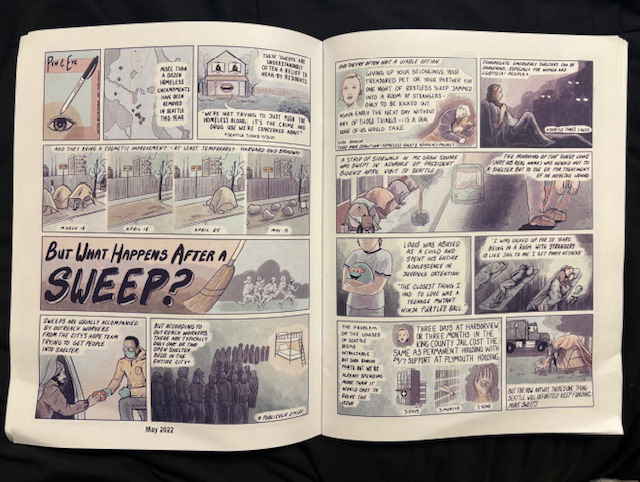
Sweeps Kills Comic Book by Marie Bouassi and David Stoesz